Health Care Provider Portal
Reducing physican burnout one portal at a time.
I completed this user experience project while I was working as a Senior Product Experience Designer at a Fortune 5 health care company. I worked with a team of 4 designers to help create the following:
Journey maps
Various fidelity wireframes
Interactive prototypes
Final client read-out presentations
-
Situation
A health care company has been working on a role-based unified portal strategy and experience for providers and supporting players in the ecosystem across the United States. As those efforts come closer to finalization of priorities and roadmap, it is time to begin working on how the product experience will be realized for its users.
-
Complication
Today’s provider experience includes a mixture of separate portals and tools requiring the user to navigate into each one for specific information necessary for completing daily tasks. Navigating in and out of these systems is time consuming and confusing with some duplication of data showing differing values between systems. This causes user frustration, mistrust of the data provided, and often leading to abandonment or offloading the task to other roles – compounding their job requirements and workload.
-
Resolution
By learning directly from users what their pain points are, along with the tasks they need to complete in their daily work, we can create clear journey maps that are tied to the services which enable completion of those tasks.
After clarifying the tasks and services required, we can design role-based experiences that satisfy the needs of the user. These experience designs will align to prioritized capabilities and features, supporting fast and accurate delivery of a new, user-centric provider portal experience.
The Design Process
User Interviews
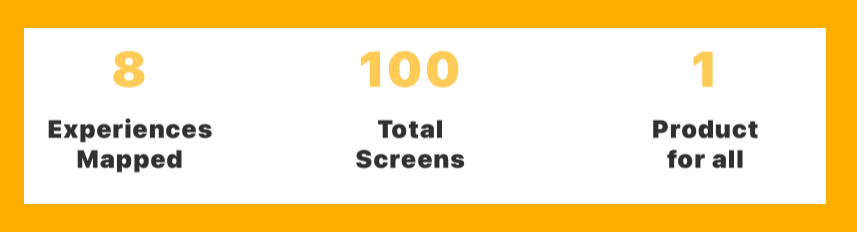
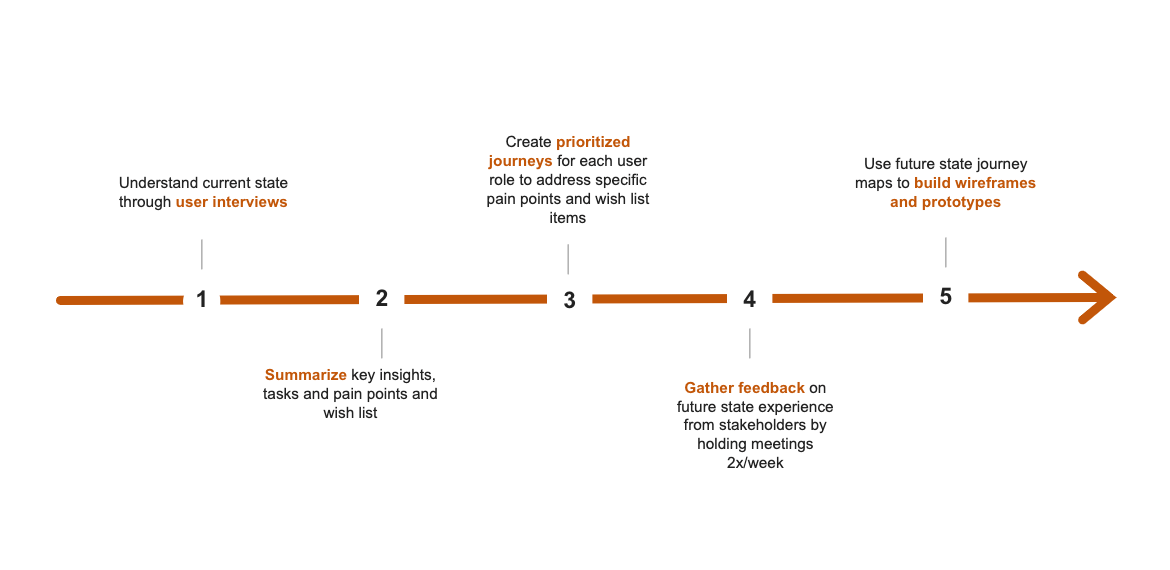
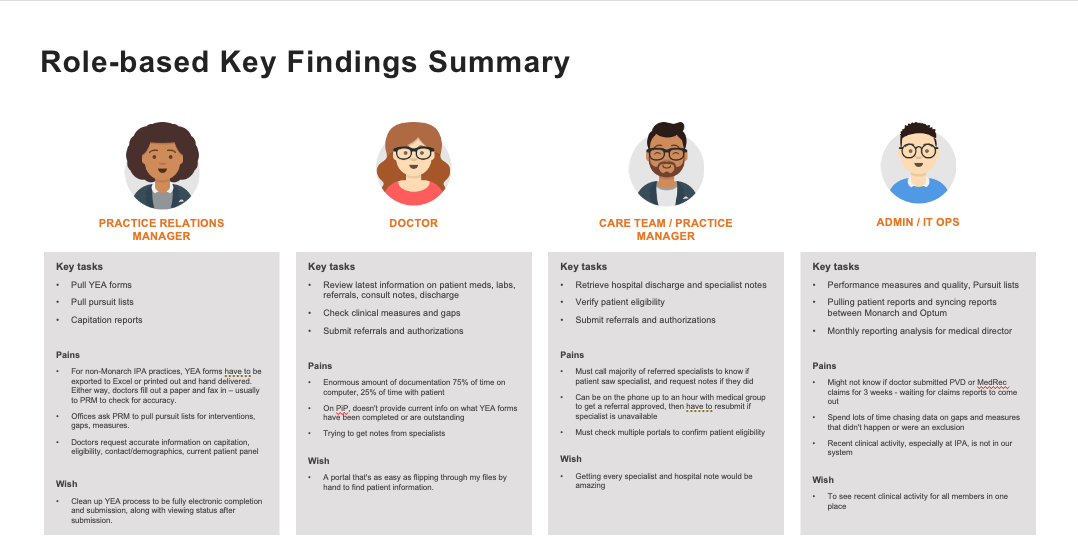
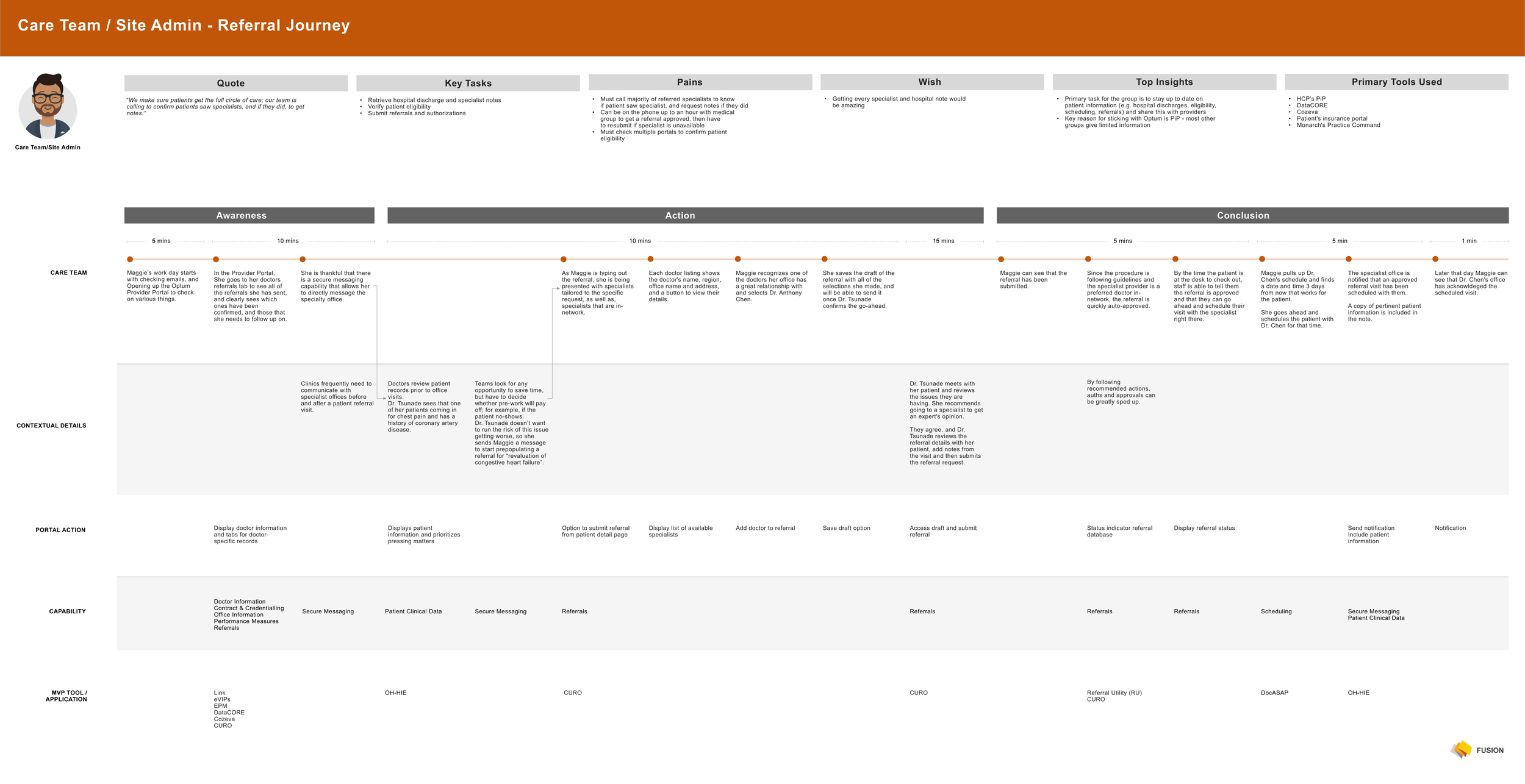
The design team conducted 30 user interviews from four main health care roles including doctors, practice relations managers, care team specialists, and IT specialists. The user interviews were used to inform 8 future-state journey maps.
Future State Journey Maps
Based on our user interview synthesis, we created future state journey maps for each user role that we interviewed. In the future state, there is an absence of user pain points. We used the journey maps to inform our wireframing design process.
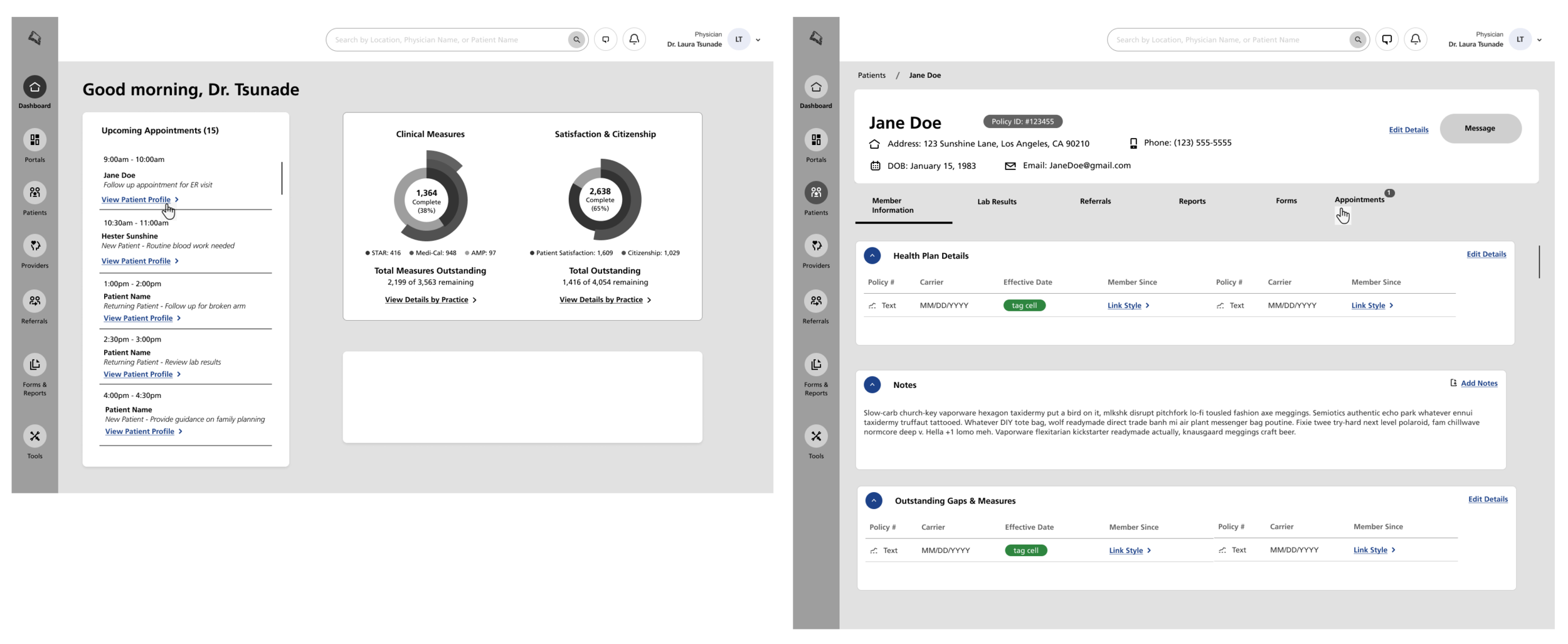
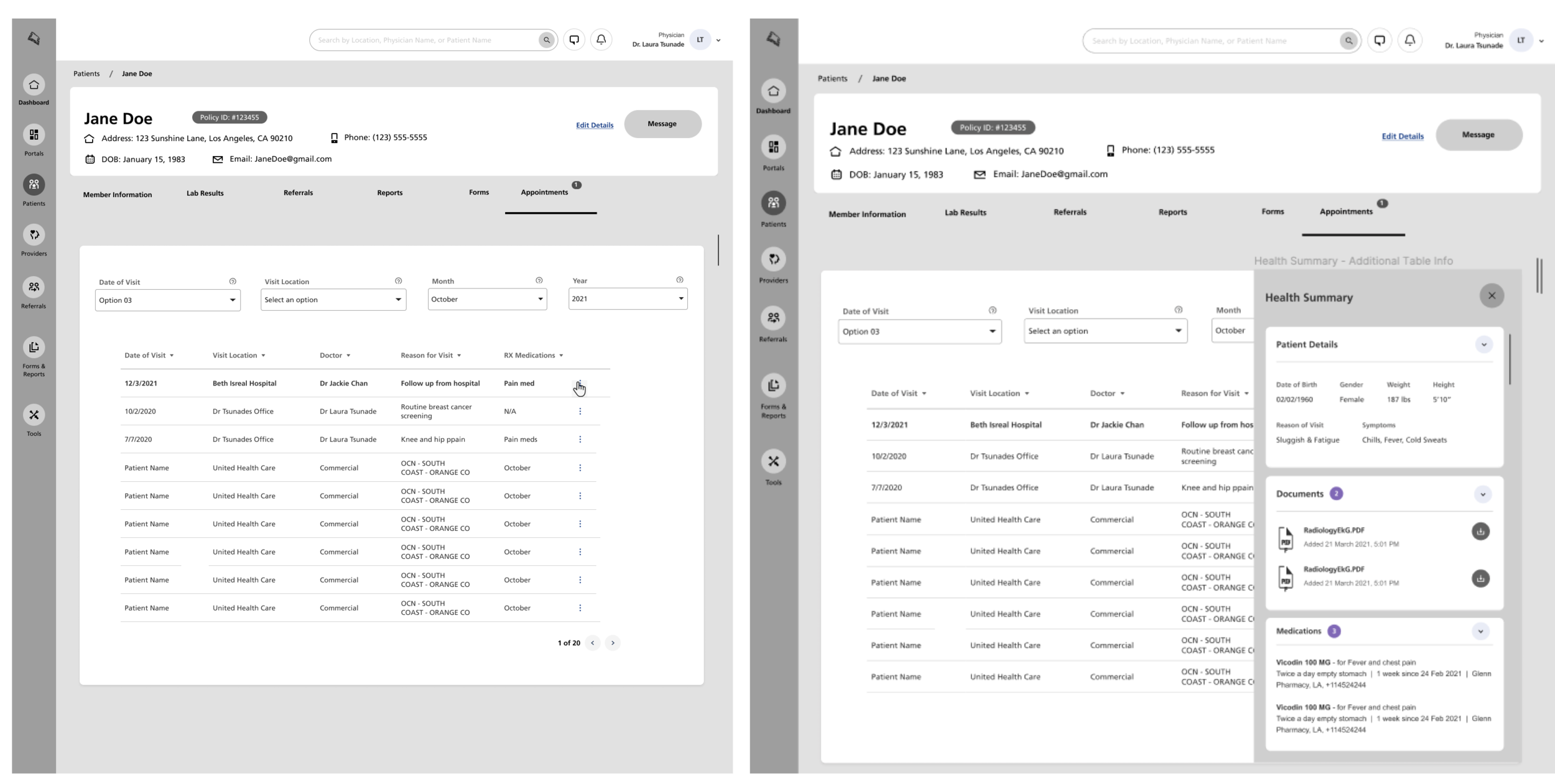
Wireframes
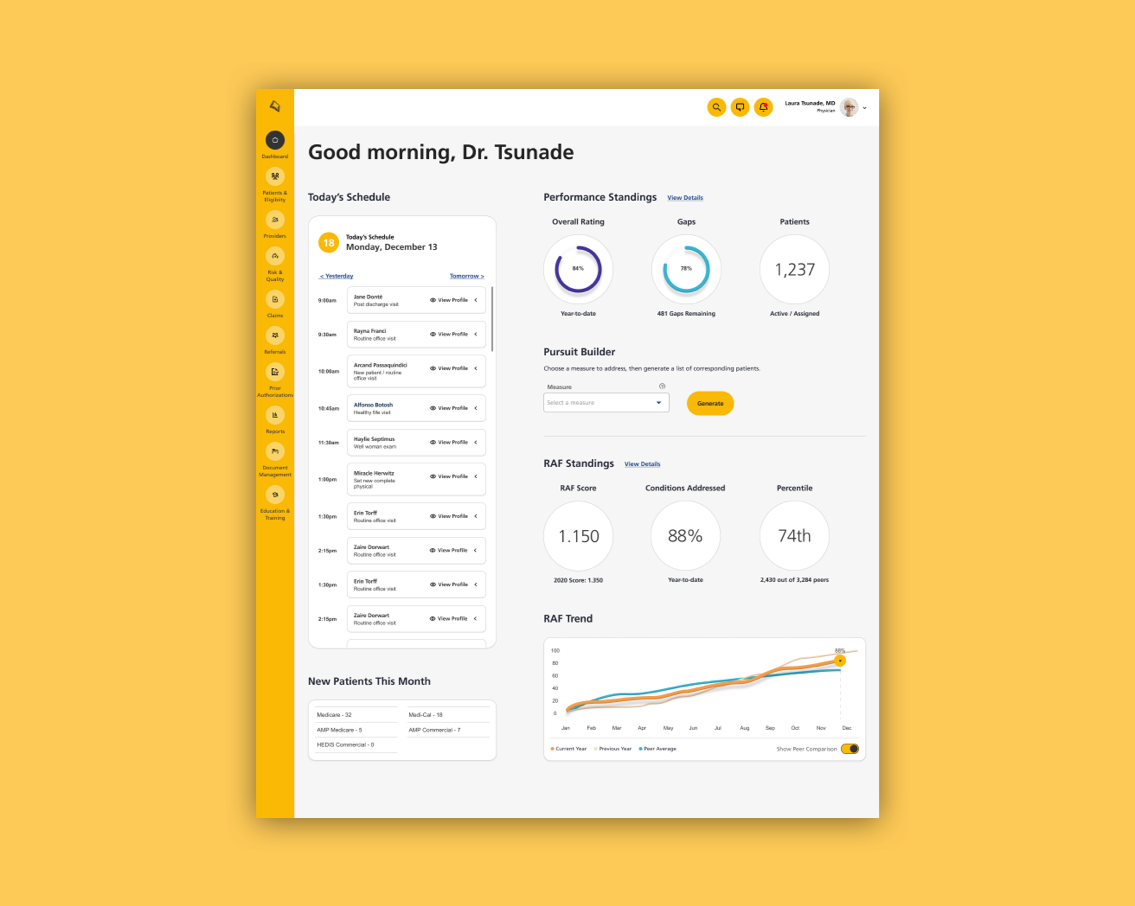
We started with low-fidelity wireframes. During this time, the company was transitioning to a new design system. We learned and utilized the new design system components as we iterated on our wireframes.
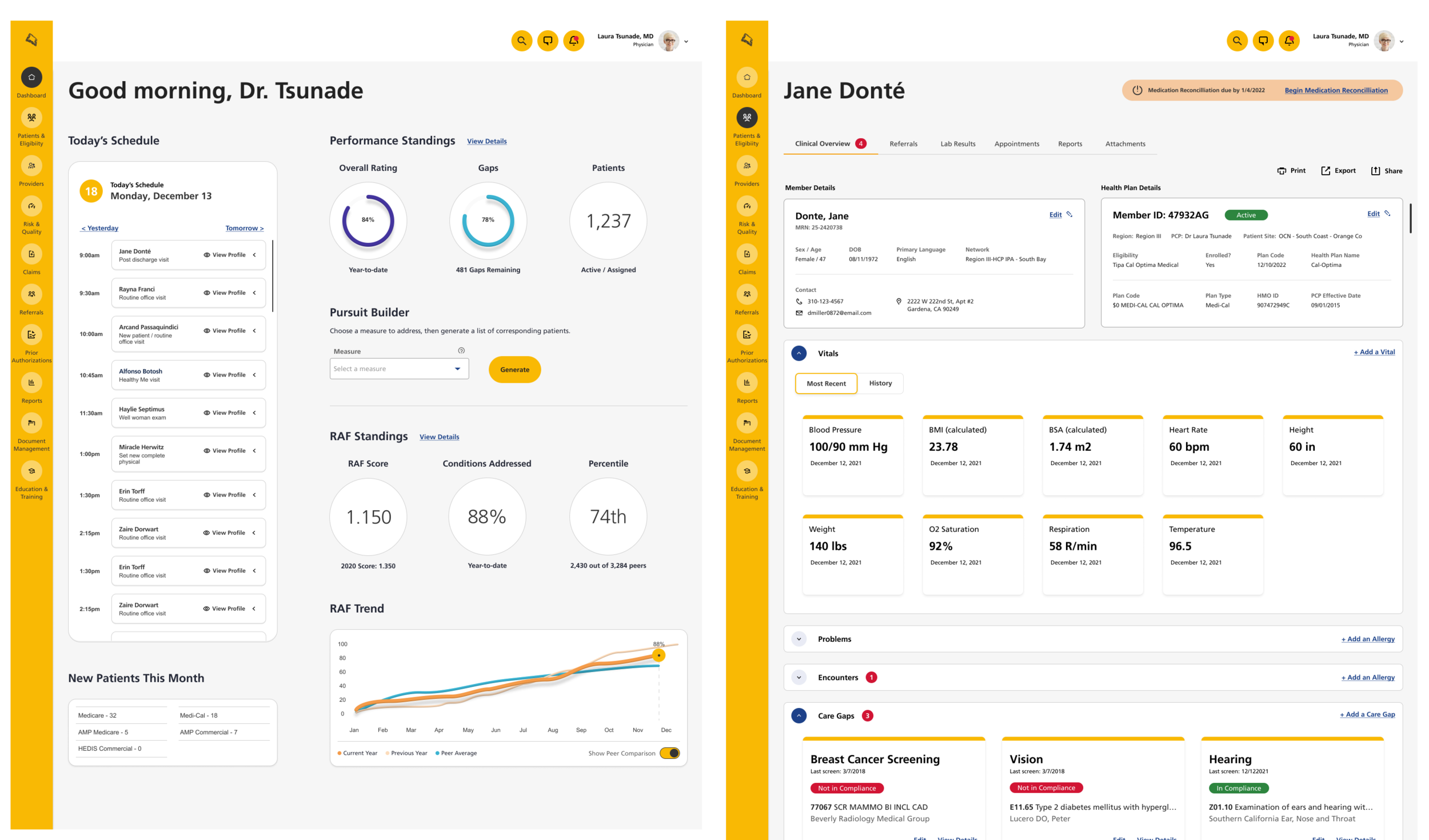
High Fidelity Wireframes
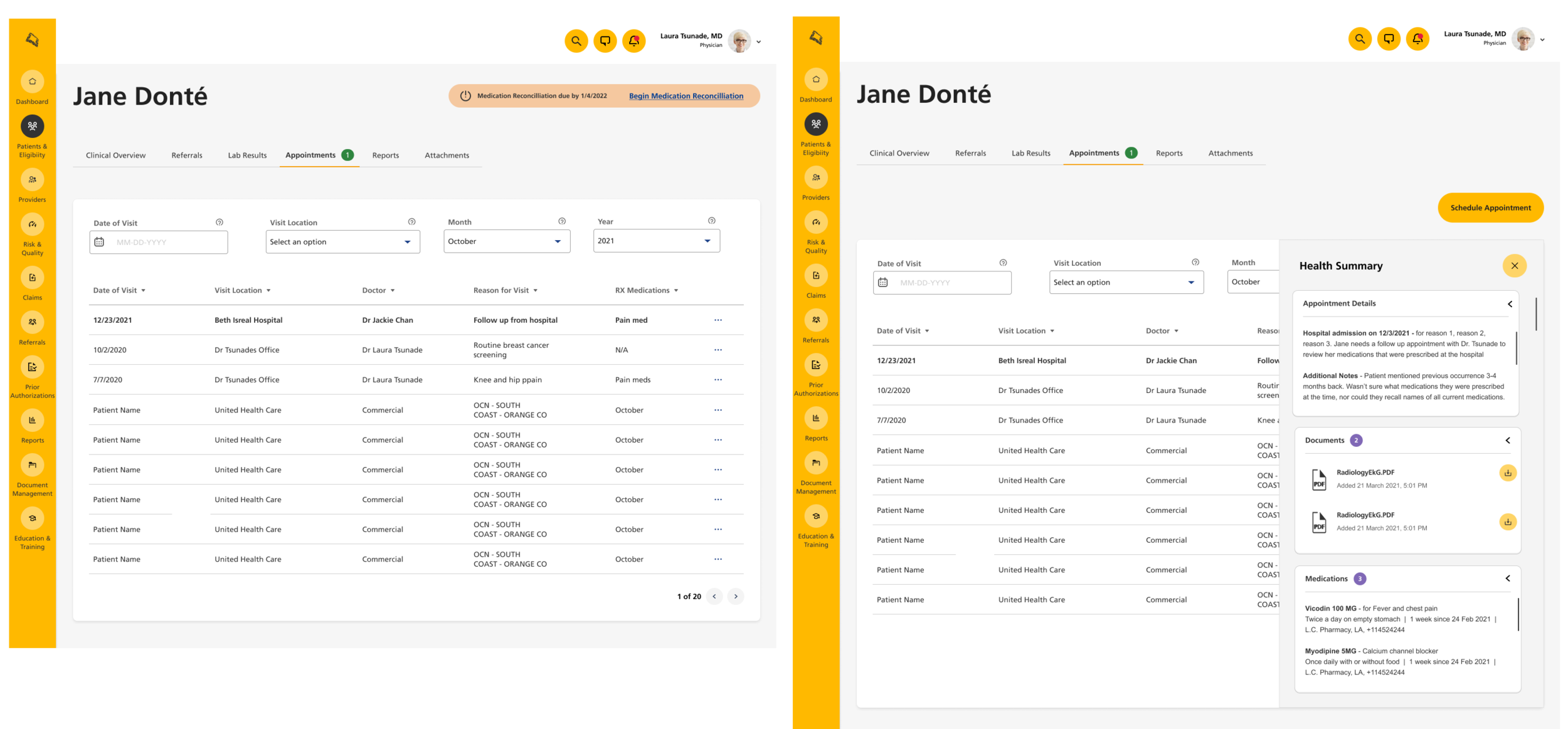
Prototyping
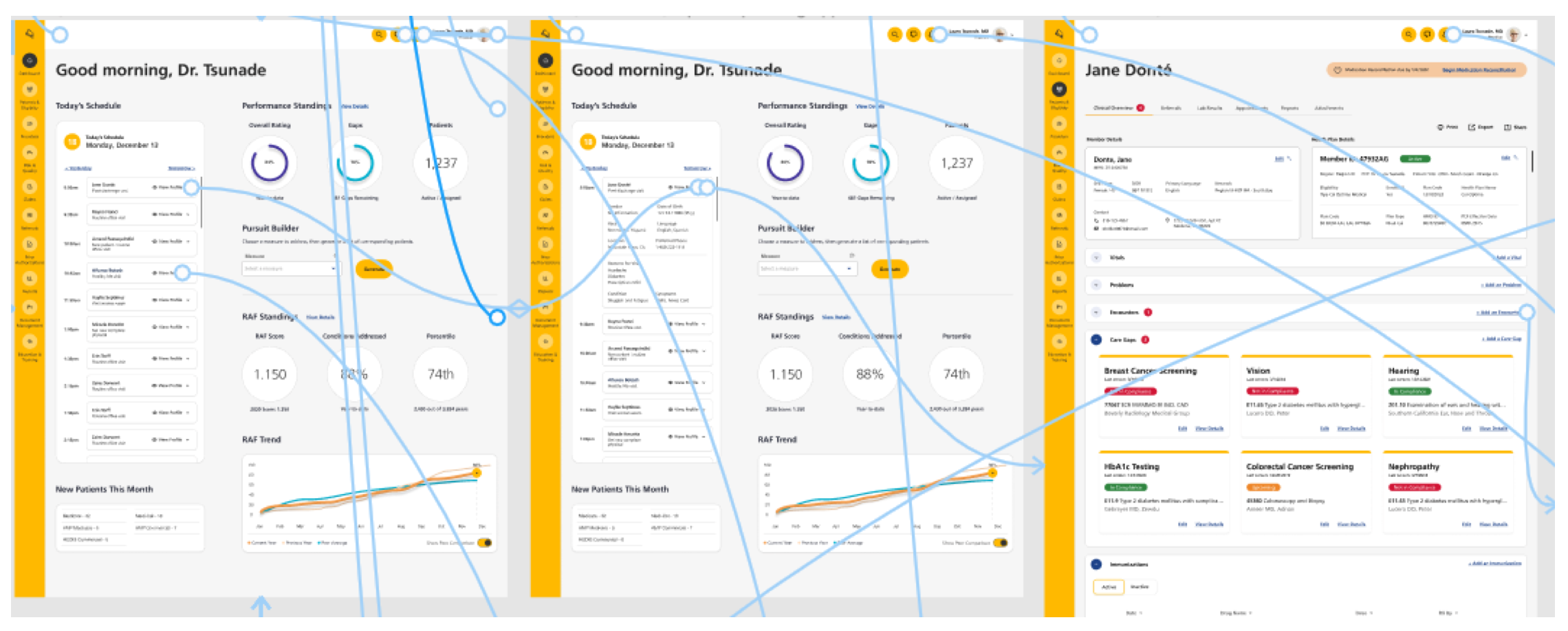
After building the high-fidelity wireframes, we created an interactive prototype using Figma
Final Output & Impact
After conducting multiple rounds of wirefame iterations, we ultimately produced over 100 wireframes and 100 high-fidelity comp screens for 4 role-based users within a 4 week timeline. Our solution will massively simplify the user experience by reducing task completion complexity, care alignment and efficiency, and increased health outcomes for patients and providers. This could save the health care industry an estimated $10 million - $100 million dollars per year.